Tacoma
Apocrypha
Trucks whispered about in the back rows of Toyota Jamborees. Pulled from leaked engineering memos, retired TRD employees' garages, and one very persistent FOIA request. Read at your own risk. Cite at your own peril.
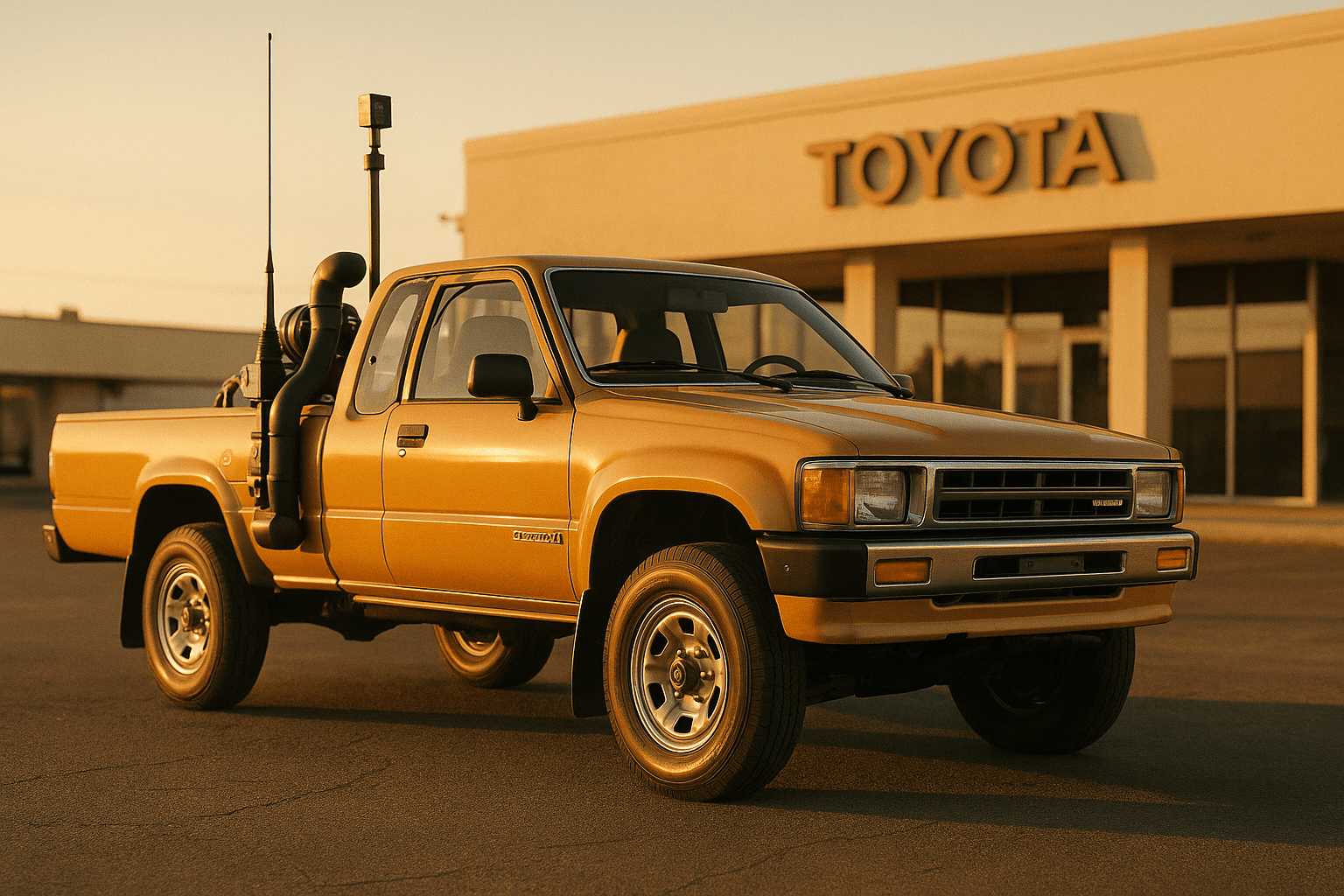
Toyota Pickup SR5 Turbodiesel Federal
Toyota's unreleased US-market turbodiesel Pickup, developed in 1986 as a hedge against a second oil shock and positioned above the gas SR5 as the frugal work-truck flagship. Powered by the JDM 2L-TE with a federalized EGR system and an all-new 5-speed manual, sold in Xtracab long-bed only with no automatic option. Certification was pulled at the eleventh hour when the EPA's updated particulate rules made the emissions package economically unworkable, and every pre-production unit was crushed except for three retained by Toyota Technical Center.
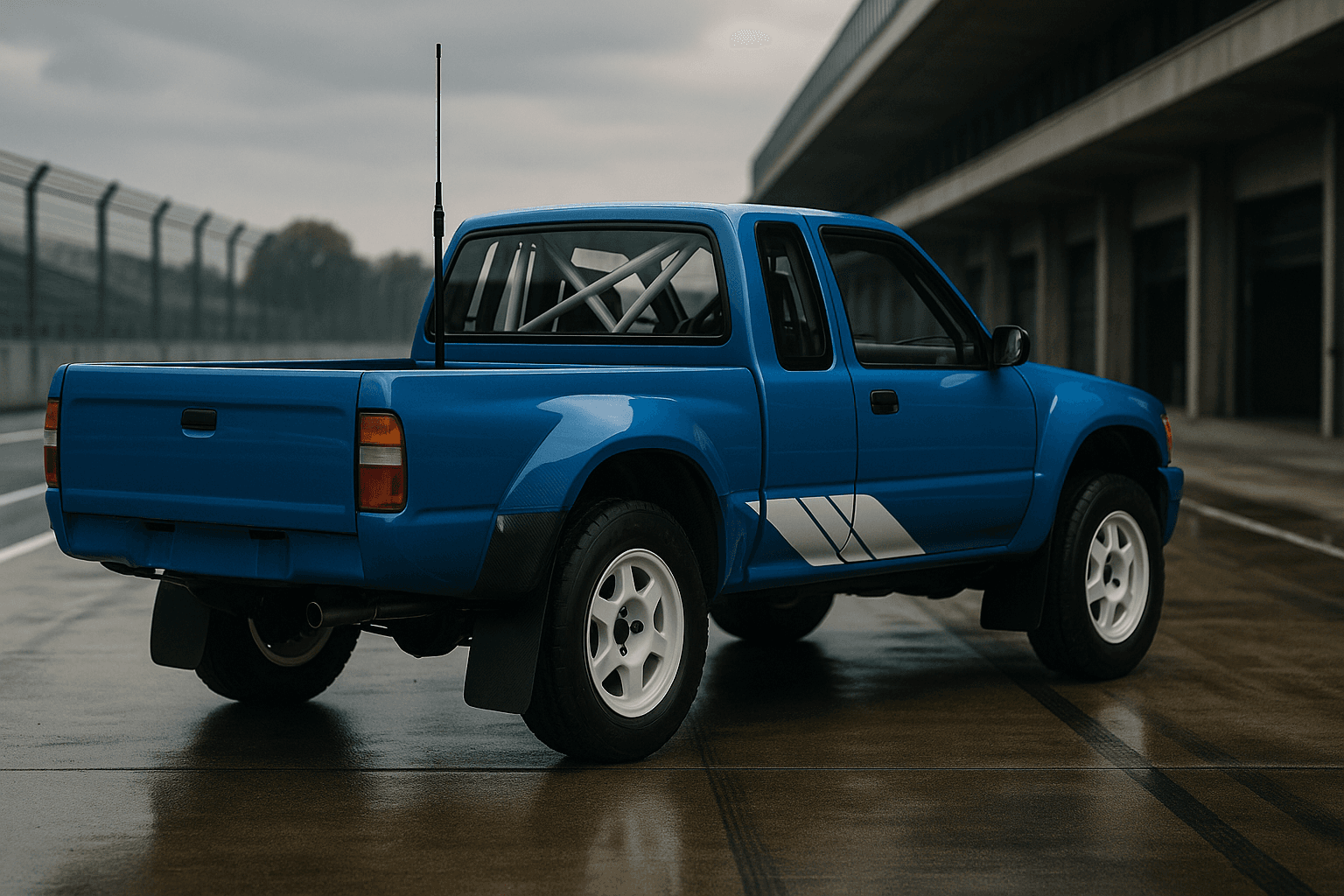
Toyota Pickup GT-Four Group A Homologation
A homologation special built by Toyota Team Europe for a Group A rally program that never received FISA approval — positioned as a WRC halo above the SR5 V6 and intended to qualify the Pickup for the same truck classes then dominated by the Peugeot 405 T16. The Celica GT-Four's 3S-GTE turbocharged four, full-time AWD transfer case, and close-ratio five-speed were transplanted into an Xtracab shell with flared fenders, a roll-cage-ready floorpan, and Speedway Blue paint over Group A dimensional stickers. When FIA rewrote the truck class mid-1991, the homologation batch was written off as R&D and sold through the Toyota employee purchase program at net book value.
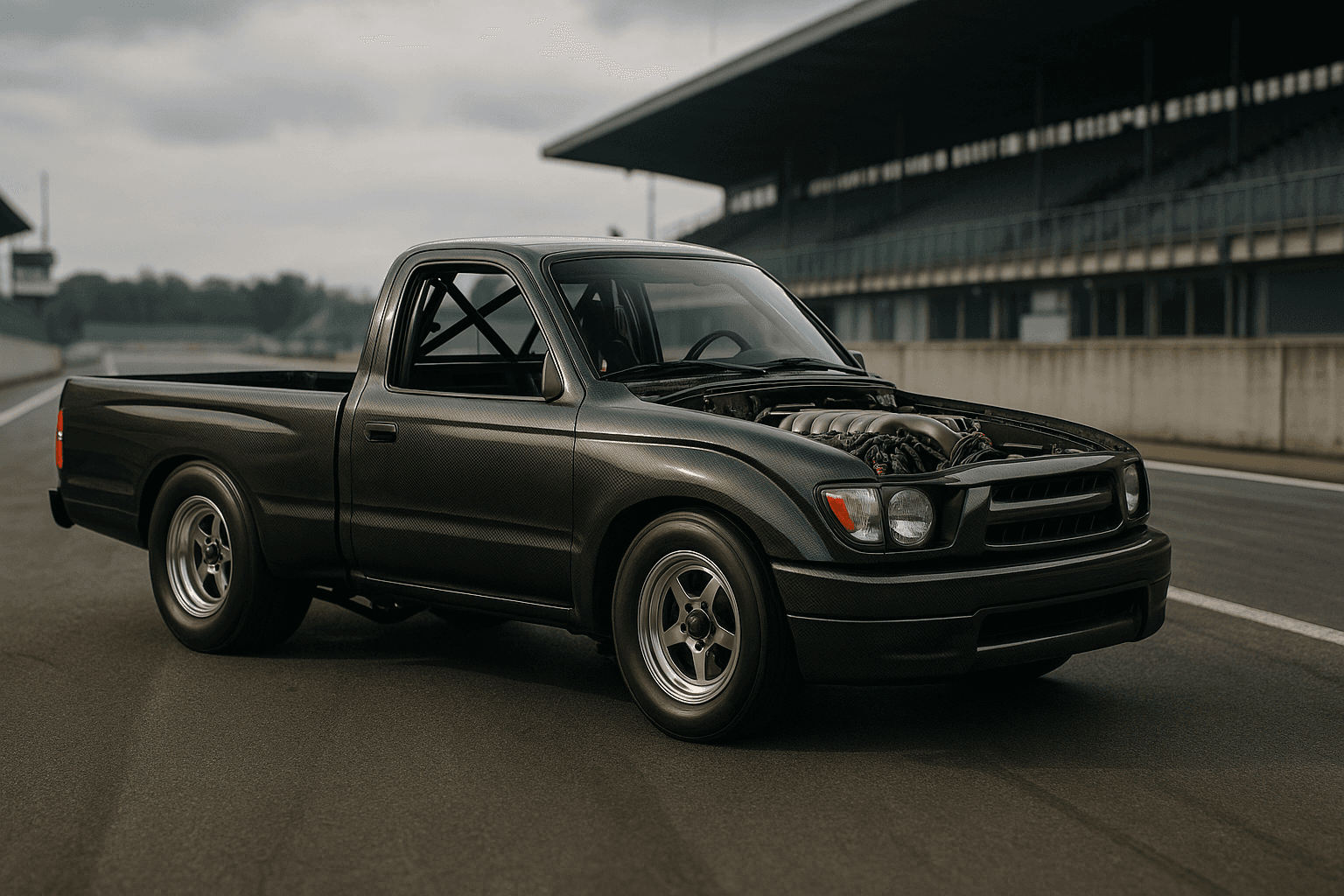
Tacoma TRD V8 Super Stock
A one-off NHRA Super Stock homologation run built by TRD USA in 1999 to qualify the Tacoma for the Pro Stock Truck class — positioned at the absolute top of the first-gen lineup as a drag-strip halo above the yet-to-exist S-Runner. The 2UZ-FE V8 from the new Land Cruiser 100 Series was dropped into a lightened Regular Cab short bed with a tubular K-member, fuel cell, and five-speed R154 manual; the gas tank was moved inside the cab and the passenger seat was deleted. Twelve units were built to satisfy the NHRA's 'offered for public sale' clause, listed at $44,500 in a single-page flyer that went out to twelve dealers.
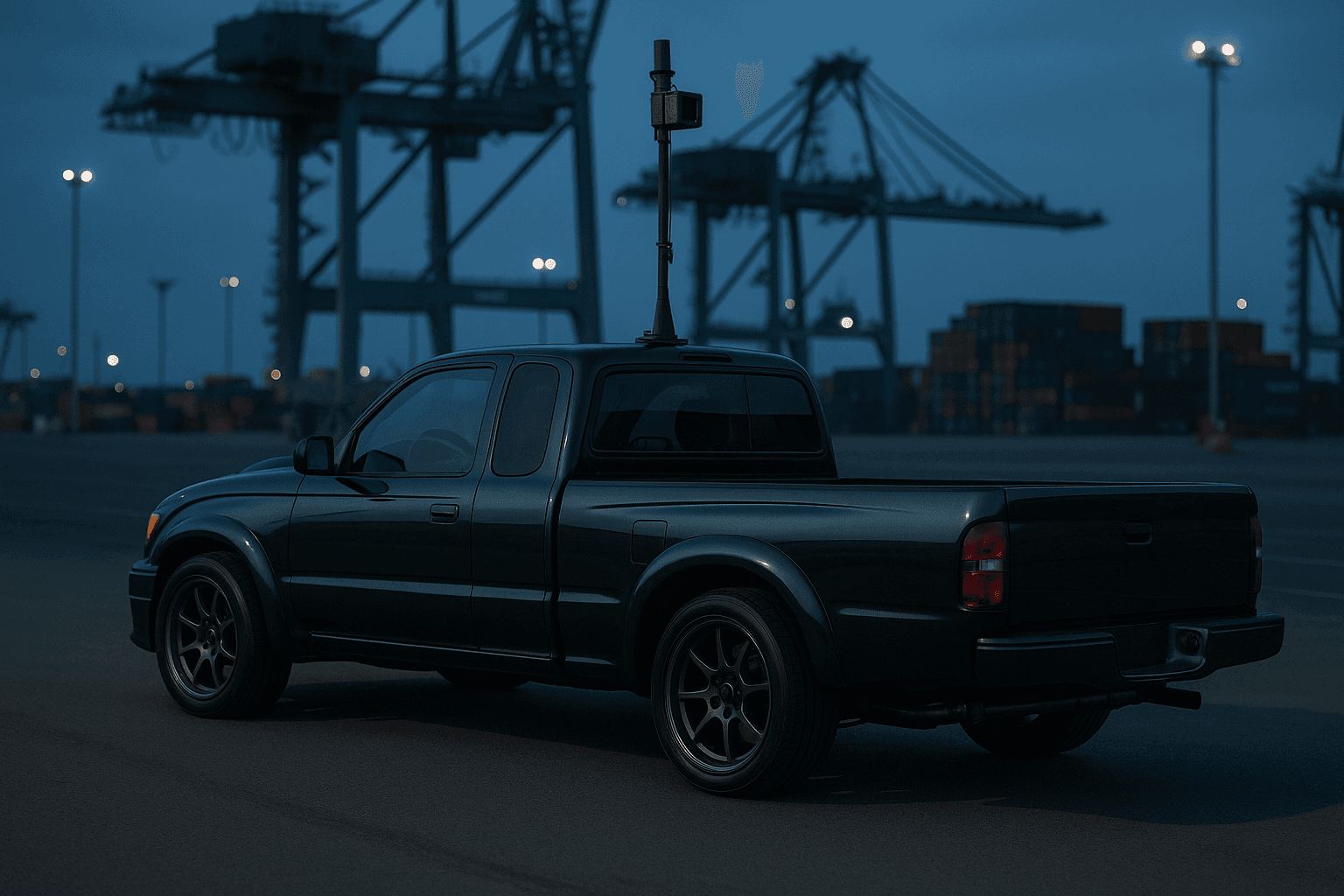
Tacoma S-Runner Stage III Skunkworks
Pre-production S-Runner development mules built during the summer 2000 validation phase — mechanically identical to the showroom S-Runner but fitted with the TRD roots-type supercharger that Toyota USA couldn't federalize in time for the September launch. Six were assembled at the Gardena TRD shop, driven by Toyota USA engineers, and quietly sold through the employee purchase program in fall 2001 with the supercharger left installed 'as a favor.' They are the only factory-blown first-gen S-Runners that were ever titled.
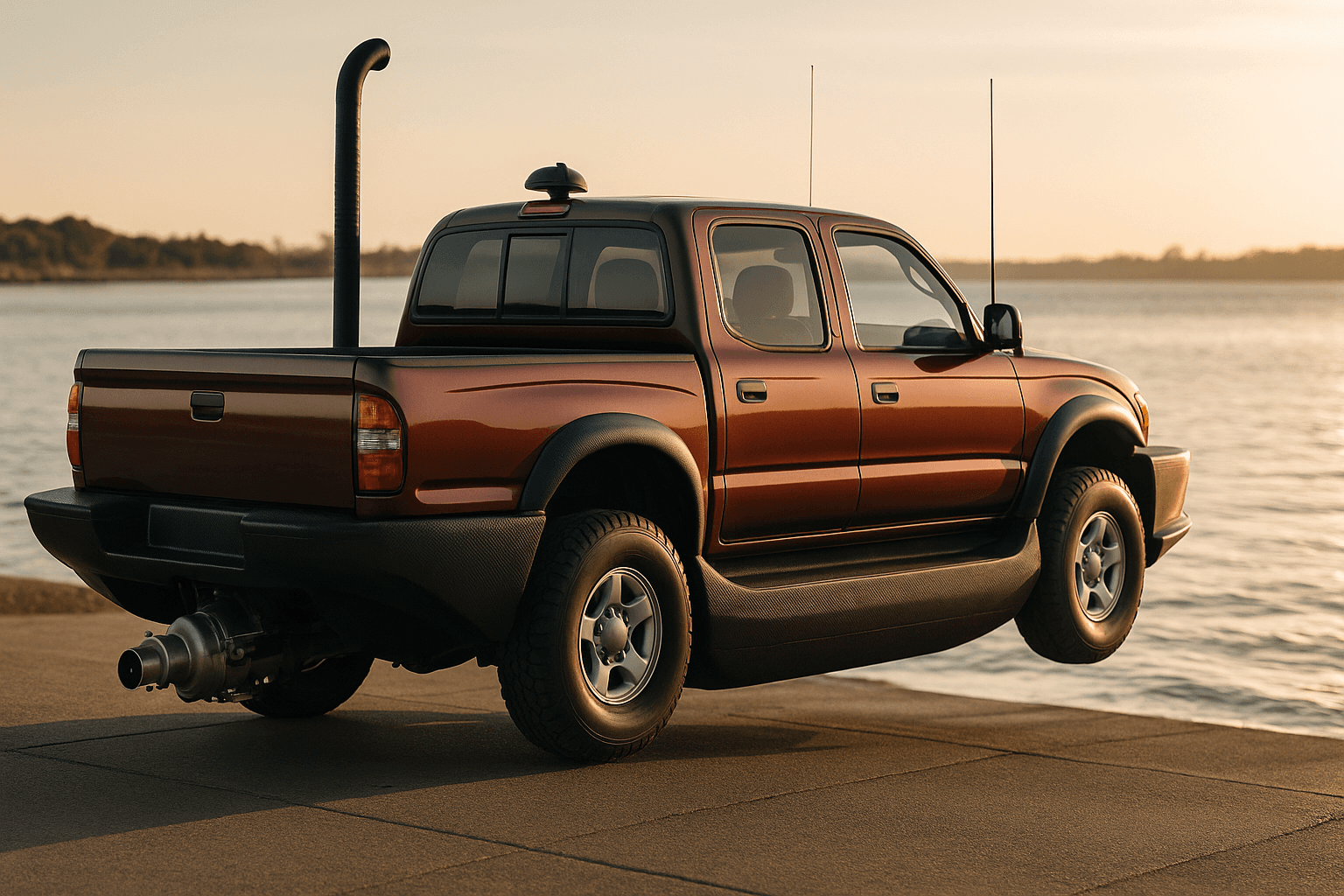
Tacoma Double Cab Amphibious FEMA Concept
Toyota's 2003 submission to a short-lived FEMA solicitation for a coastal flood-response vehicle — positioned as a single-purpose Double Cab with all of the Tacoma's off-road credentials plus a rear-mounted jet drive and sealed drivetrain. Engineered in a joint program between Toyota Technical Center and a marine-drive contractor in Long Beach, two Double Cabs were converted with composite hull skirts, raised air intakes, and a PTO-driven Hamilton waterjet under the tailgate. FEMA selected a modified Unimog instead; Toyota kept both prototypes and one still lives in Torrance heritage storage.
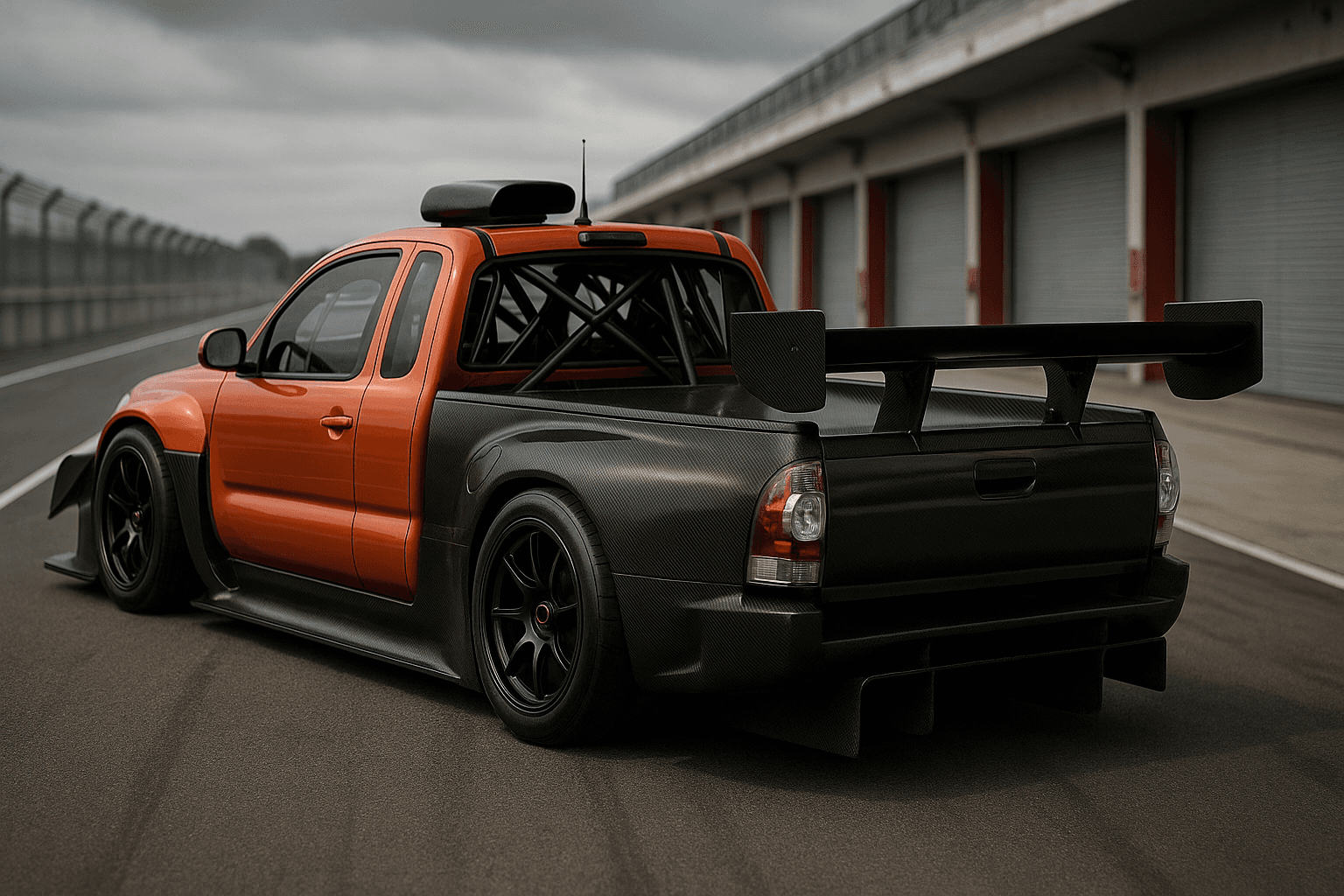
Tacoma X-Runner GT1 Le Mans Homologation
TRD USA's failed 2007 bid to homologate the X-Runner for the ACO GT1 class at Le Mans — a carbon-bedded, sequentially-shifted, naturally-aspirated V8 pickup that is almost certainly the most engineered Tacoma ever built. The 2UR-GSE's block was dry-sumped, the intake was reversed to feed from the cowl, the bed floor was replaced with a single sheet of prepreg carbon, and the suspension was adapted from the Le Mans Corvette C6.R program through a shared supplier. The ACO rejected the homologation on the grounds that a 'pickup is not a GT.' The three completed cars were retained by TRD and one is occasionally displayed at Long Beach Grand Prix support events.
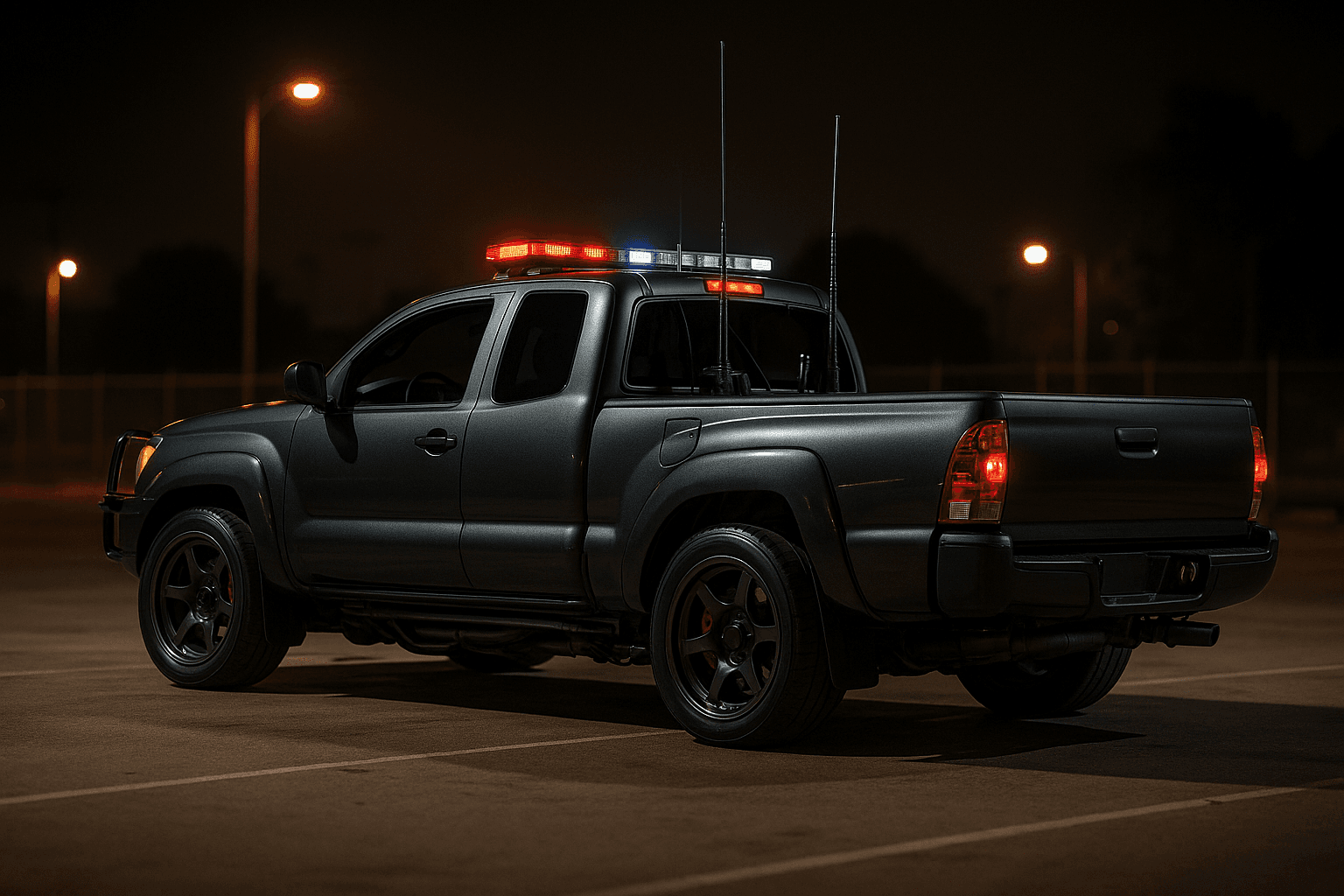
Tacoma TRD Police Interceptor (concept)
Toyota USA's 2009 attempt to pitch the Tacoma Access Cab to US municipal fleets as a Crown Victoria Police Interceptor replacement — positioned alongside the then-new Dodge Charger Pursuit and Chevrolet Caprice PPV in a market Ford was about to exit. The twelve prototypes wore twin-turbocharged 1GR-FE V6s developed by TRD, a reinforced frame, upgraded brakes, dual alternators, and standard police wiring harnesses. Two were loaned to the LAPD for a six-month fleet evaluation; the officers reported excellent reliability but a cargo bed they 'had no idea what to do with.' The program ended in 2010 with no production order.
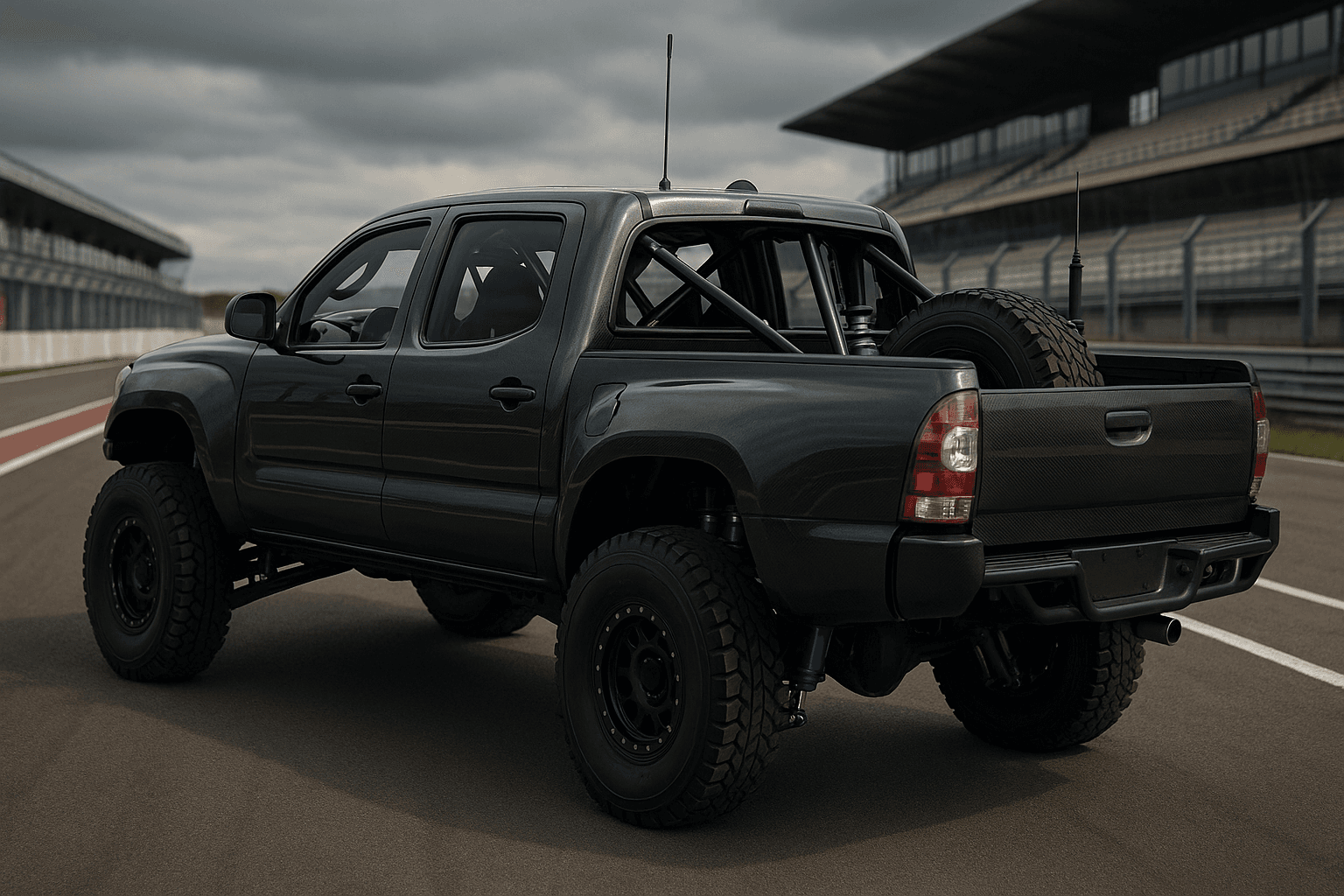
Tacoma T|X Baja 'Ironman' Trophy Signature
A 2013 T|X Baja Series variant commemorating Ivan 'Ironman' Stewart's career — essentially a race-prepped desert truck that Toyota issued US road titles for. Every example left TRD Gardena with 14 inches of front suspension travel, triple-bypass Kings at all four corners, a stripped interior with bolt-in race seats, and Ivan Stewart's signature embossed into the dashboard leather. Eight were built and offered exclusively to dealers who hit their 2012 T|X Baja allocation; all eight sold within four days at a $78,000 markup over sticker, and at least three have competed in the Baja 1000 under their OEM VIN.
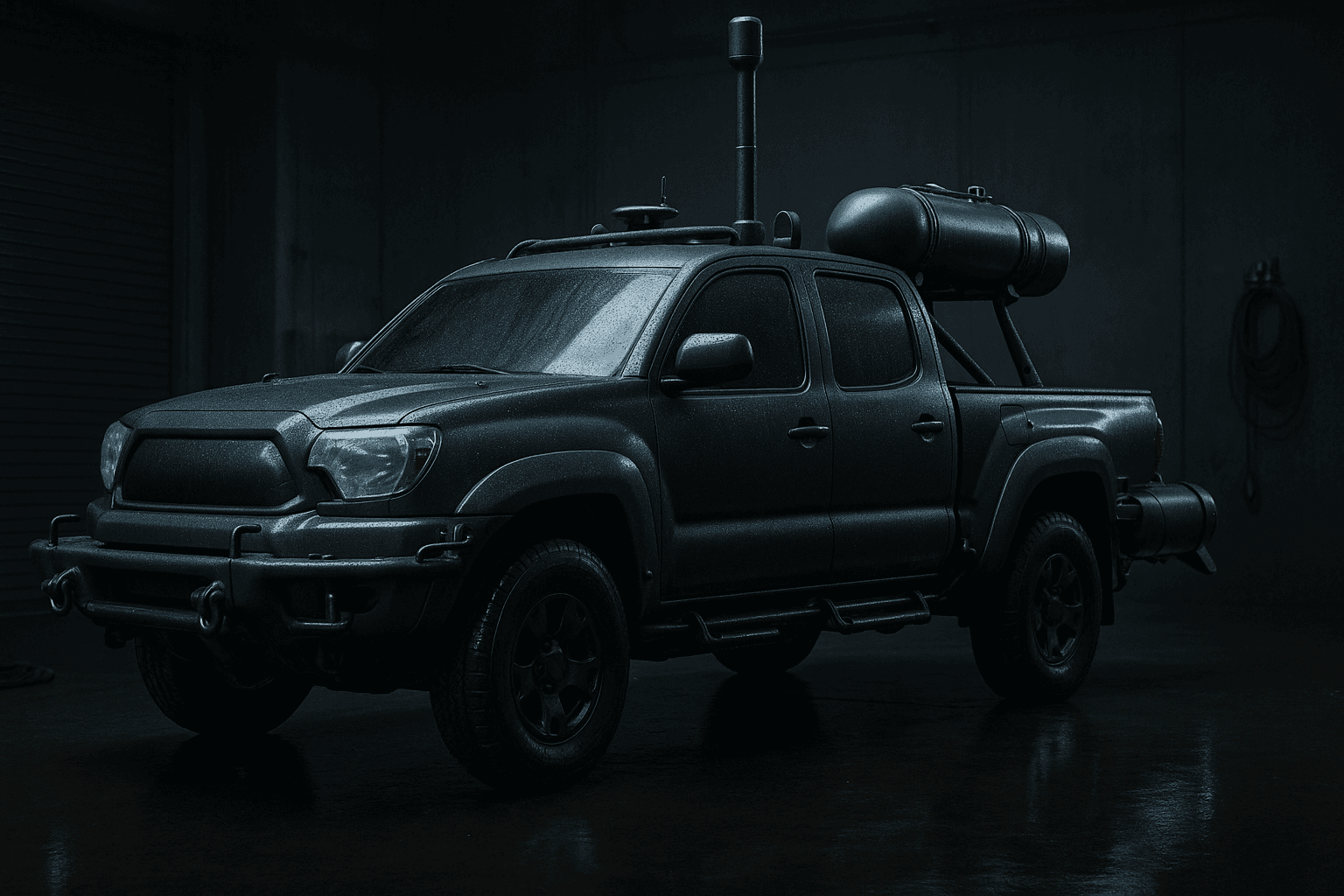
Tacoma TRD Submersible R&D
A 2015 joint research vehicle developed with a US Navy contractor in San Diego to evaluate a fully submersible, electrically propelled pickup for shallow-water special operations — positioned nowhere in the commercial Tacoma lineup, because commercially it does not exist. The drivetrain was replaced with two marinized electric motors drawing from a sealed 54 kWh LiFePO4 pack, the cabin was pressure-sealed to 12 meters, the windshield was replaced with laminated polycarbonate, and the bed served as ballast. A single functioning prototype exists. Further details are subject to the terms of the 2015 Navy R&D confidentiality agreement and any resemblance to a real vehicle is coincidental.
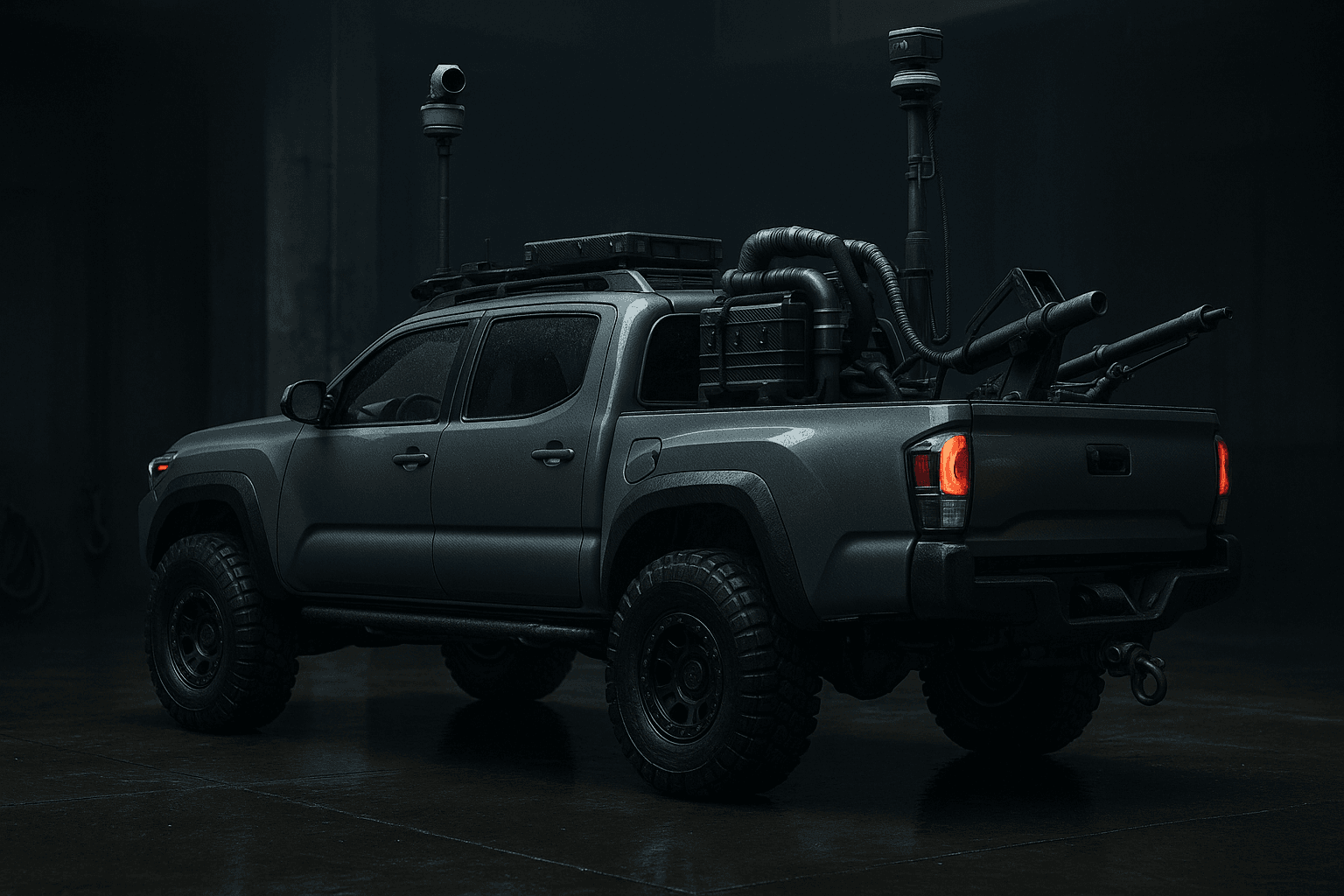
Tacoma TRD Kaiju Response Unit (Shizuoka)
A 2019 Toyota-prefecture joint program responding to renewed seismic and coastal-incident projections in Shizuoka — officially categorized as a 'large mammal response unit' in the public documentation and privately described in internal emails as 'the kaiju truck.' The mechanical package is a 2GR-FKS with a TRD-developed electrified supercharger, a reinforced frame rated to tow a twelve-ton incident module, a roof-mounted sensor mast, and a fully sealed HVAC system with CBRN filtration. One functional unit was delivered to the Shizuoka Prefectural Disaster Response Bureau and has reportedly been deployed to one non-drill incident which the Bureau declines to describe.
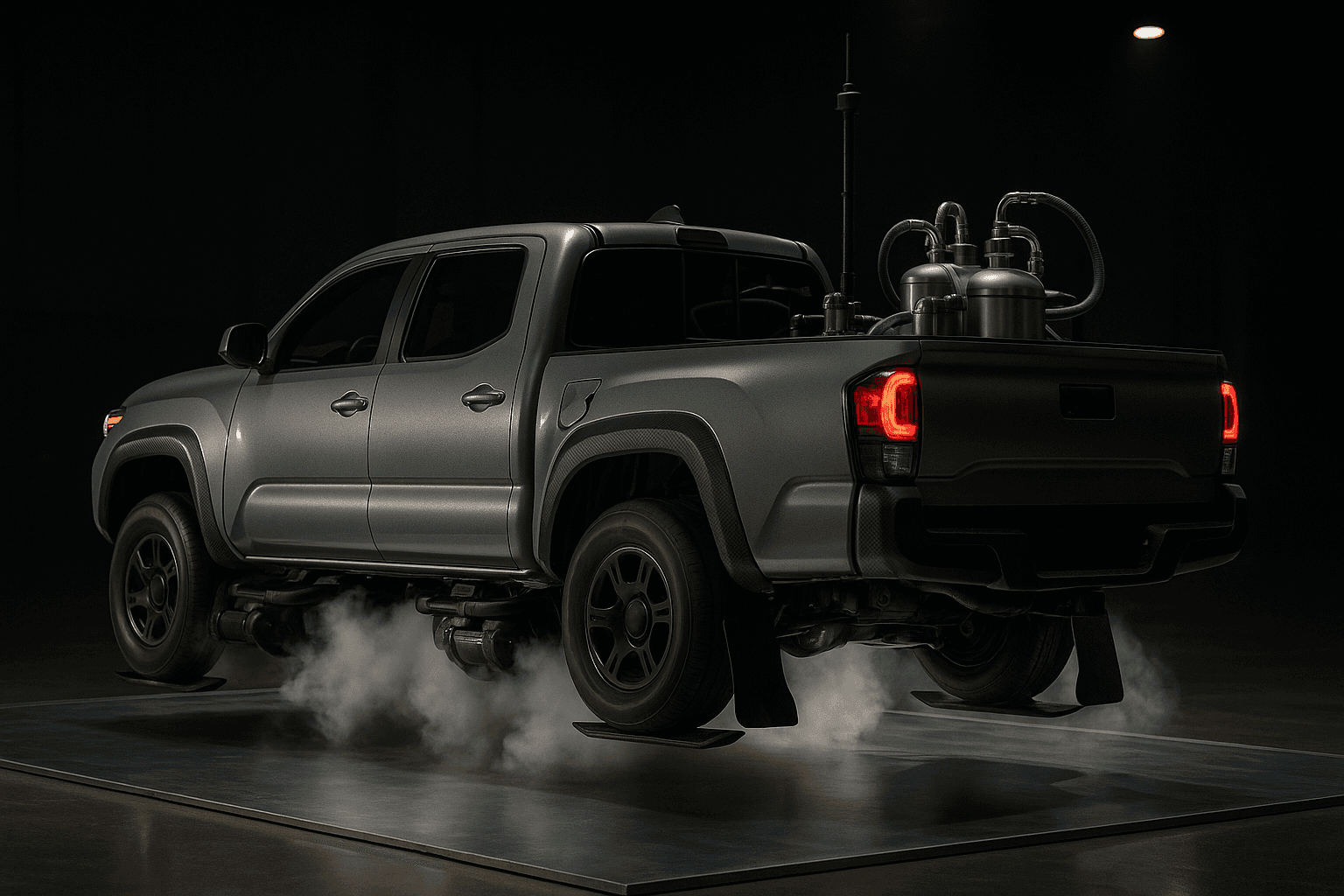
Tacoma TRD Magnetic Levitation Concept
A 2022 Toyota North America R&D showcase vehicle built around an experimental superconducting halbach-array suspension that levitates the truck roughly four centimeters off ferrous surfaces — positioned nowhere in the Tacoma lineup because it was built purely as an engineering demo for a single SEMA after-hours event. The truck will not move or levitate over asphalt, dirt, carpet, grass, water, concrete with rebar spacing greater than eight inches, or any surface Toyota owns the rights to film on. Over a specially-constructed steel plate it glides silently and corners by differential motor output. The demonstration lasted four minutes, after which the liquid nitrogen coolant ran out and the truck sat down on four carbon-fiber skids.
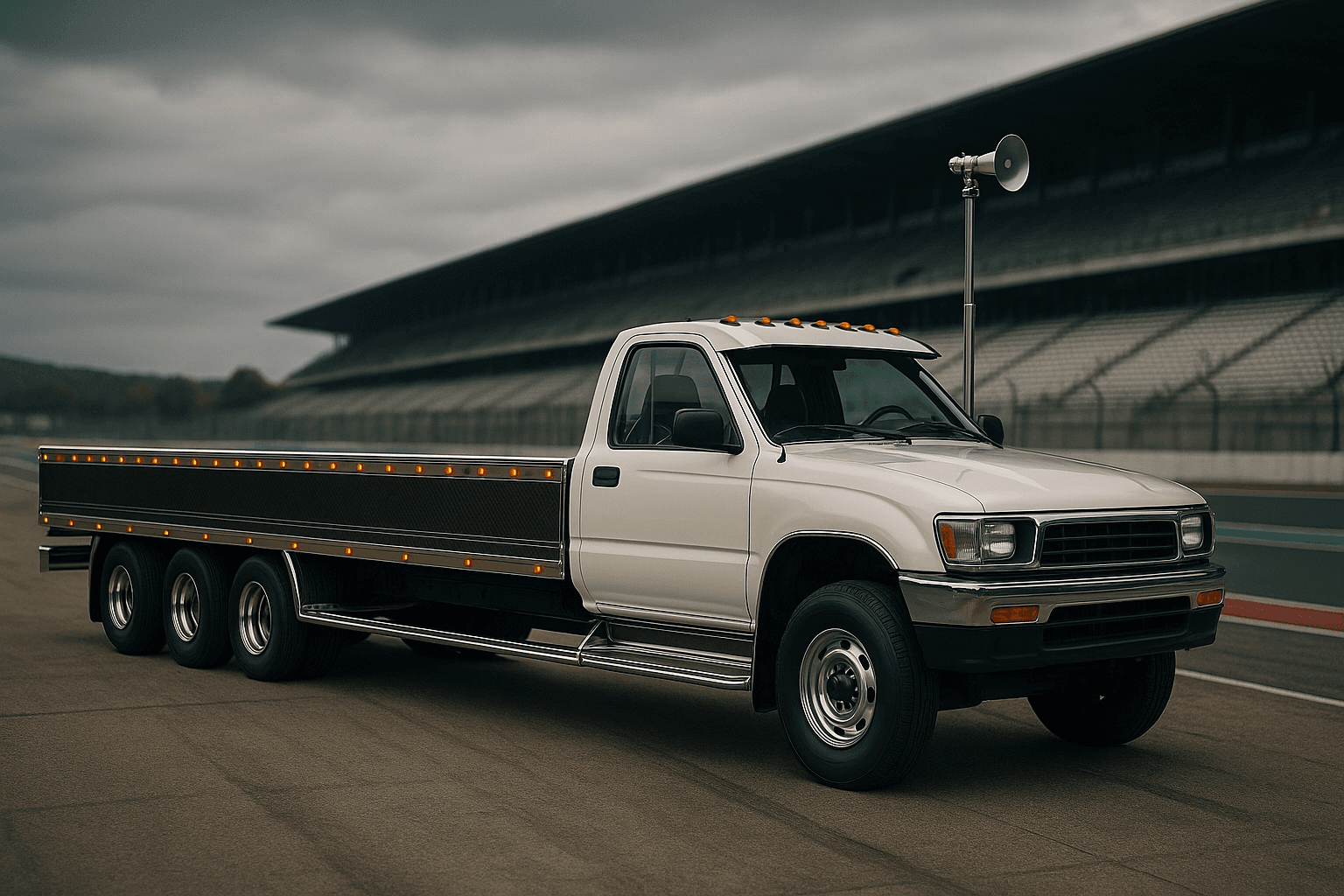
Toyota Pickup Dekatruck Ultra Long Bed (18-foot)
A 1994 Toyota Auto Body limited-run coachbuilt Pickup commissioned by the Japan Decoration Truck Association for a single-model-year homologation of the mini-dekotora class — positioned nowhere in the Pickup lineup because the base frame had to be structurally re-engineered to accommodate an eighteen-foot bed. The wheelbase was stretched by 102 inches, a mid-bed fifth axle was added for load distribution, and the whole rig was fitted with stainless chrome running boards, a factory-blessed cab visor, and twelve amber marker lights along each side in anticipation of owner customization. Toyota Auto Body built fourteen and delivered all of them to a single transport cooperative in Niigata where most were then further bedazzled beyond recognition.
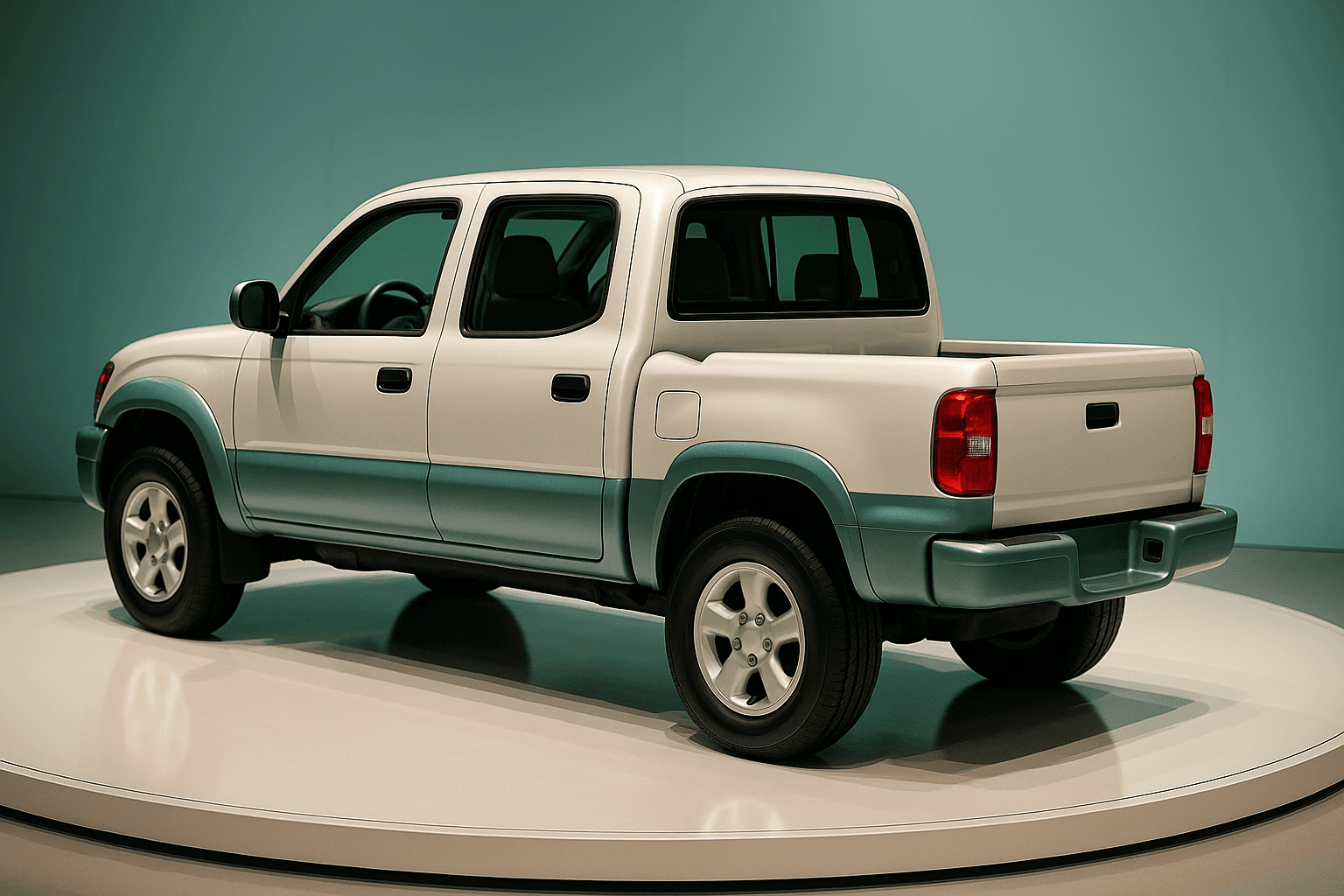
Tacoma Stubby Kei Urban Concept
Toyota's 2001 Tokyo Motor Show concept investigating a Japanese kei-class Tacoma for dense urban use — a Double Cab shortened so aggressively that the rear axle sits directly beneath the back of the cab and the bed is reduced to a comically tiny 22-inch cargo box barely large enough for two grocery bags. The wheelbase was chopped by 41 inches, the overall length came in under 11 feet, and the turning radius was advertised as 'tighter than a London cab.' Toyota presented it as a proposal for a shrinking Japanese city delivery market; the product planning committee approved a production study and then quietly shelved the whole idea when they realized the bed couldn't carry a standard milk crate.
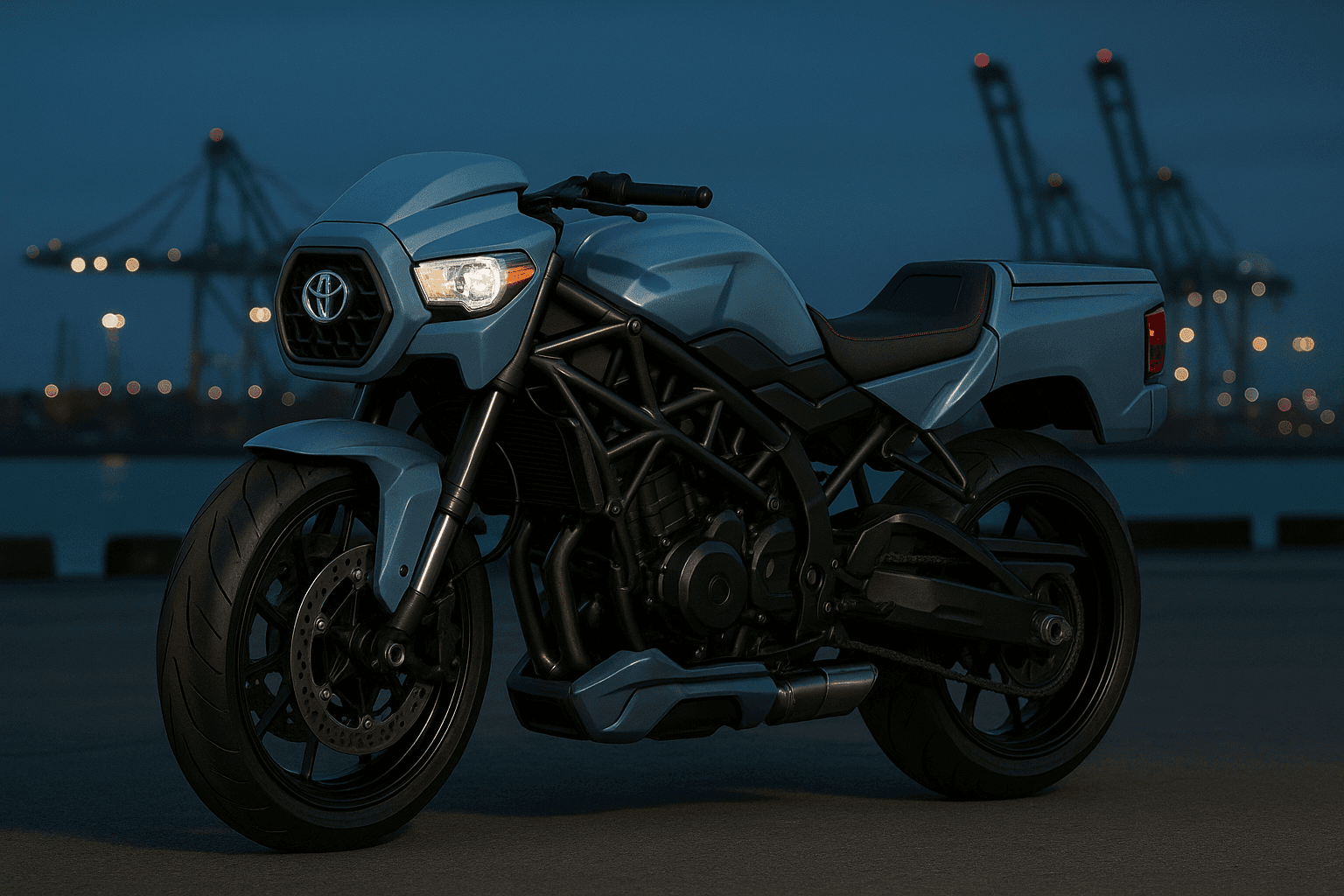
Tacoma TRD Monocycle Streetfighter
A 2018 TRD USA skunkworks build that answered a question nobody asked: what if you took the spiritual essence of a Tacoma — the TRD grille, the hexagonal headlights, the fender flares, the red TRD stitching — and rebuilt it as a streetfighter motorcycle? The result is a naked sportbike with a trellis frame wrapped in Tacoma-pattern bodywork, a miniaturized Tacoma front fascia faired into the headlight nacelle, a bed-shaped tail section with a functional mini tailgate that opens to reveal the airbox, and TRD Pro-style forged wheels in motorcycle sizes. One running unit exists, built entirely during a three-month internal hackathon, and was displayed for exactly one day at SEMA before Toyota legal asked for it to be removed from the floor.
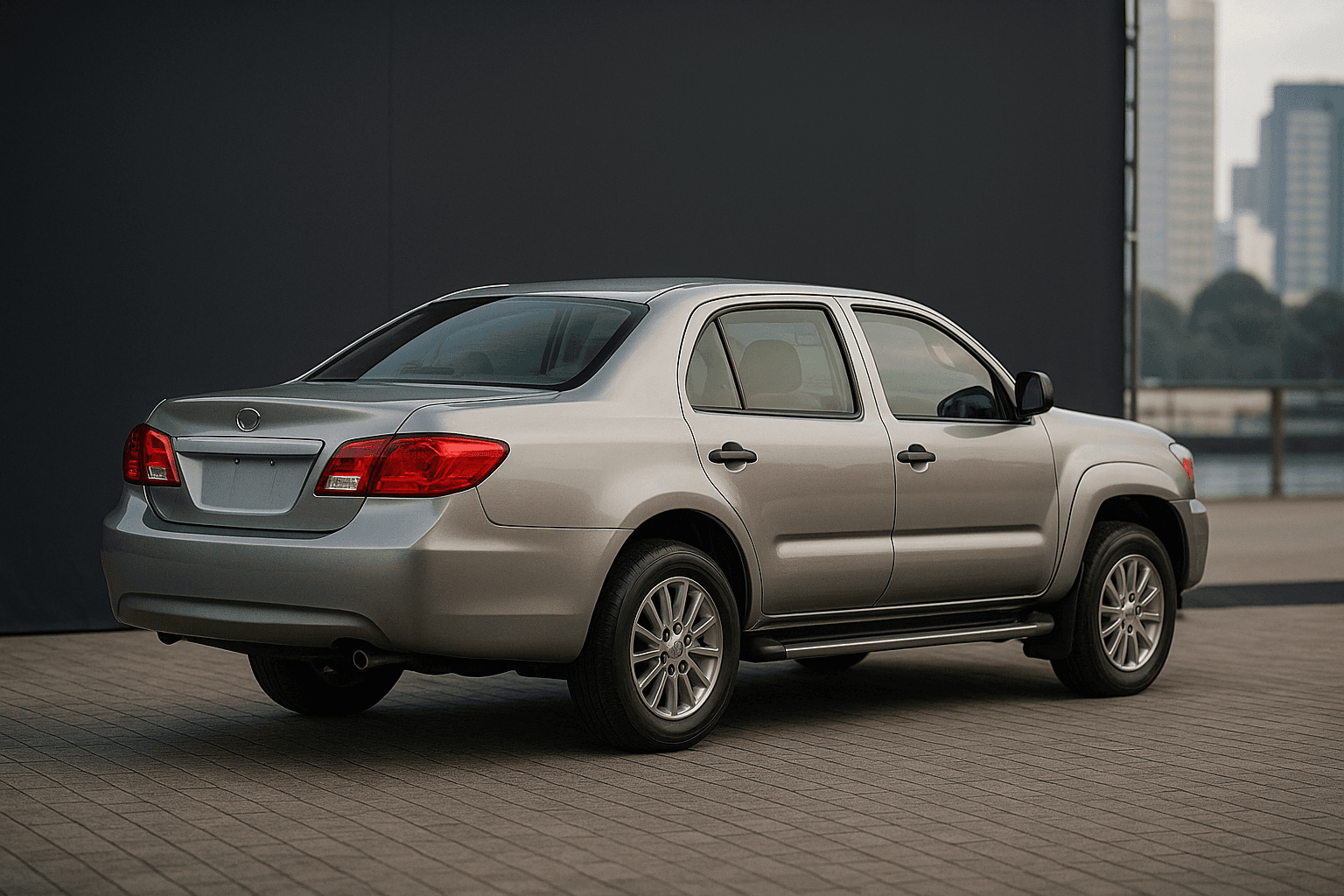
Tacoma TS Sedan Executive
A 2012 Toyota proposal for a sedan-bodied Tacoma targeting emerging-market fleet buyers who wanted Hilux reliability in a four-door three-box form factor — positioned as a Crown Royal alternative for markets where trucks were taxed more aggressively than cars. The bed was replaced entirely with a welded-in trunk structure and a body-colored sedan decklid, the cab was stretched six inches for rear legroom, the suspension was softened for passenger comfort, and the whole thing rode on 17-inch turbine-style alloys. Six prototypes were built at Toyota do Brasil in São Bernardo do Campo; the sedan was previewed for dealers in Mexico City and Buenos Aires and received one of the most confused reception tours in Toyota history. The program ended when the product planners realized it was just a bad Camry.
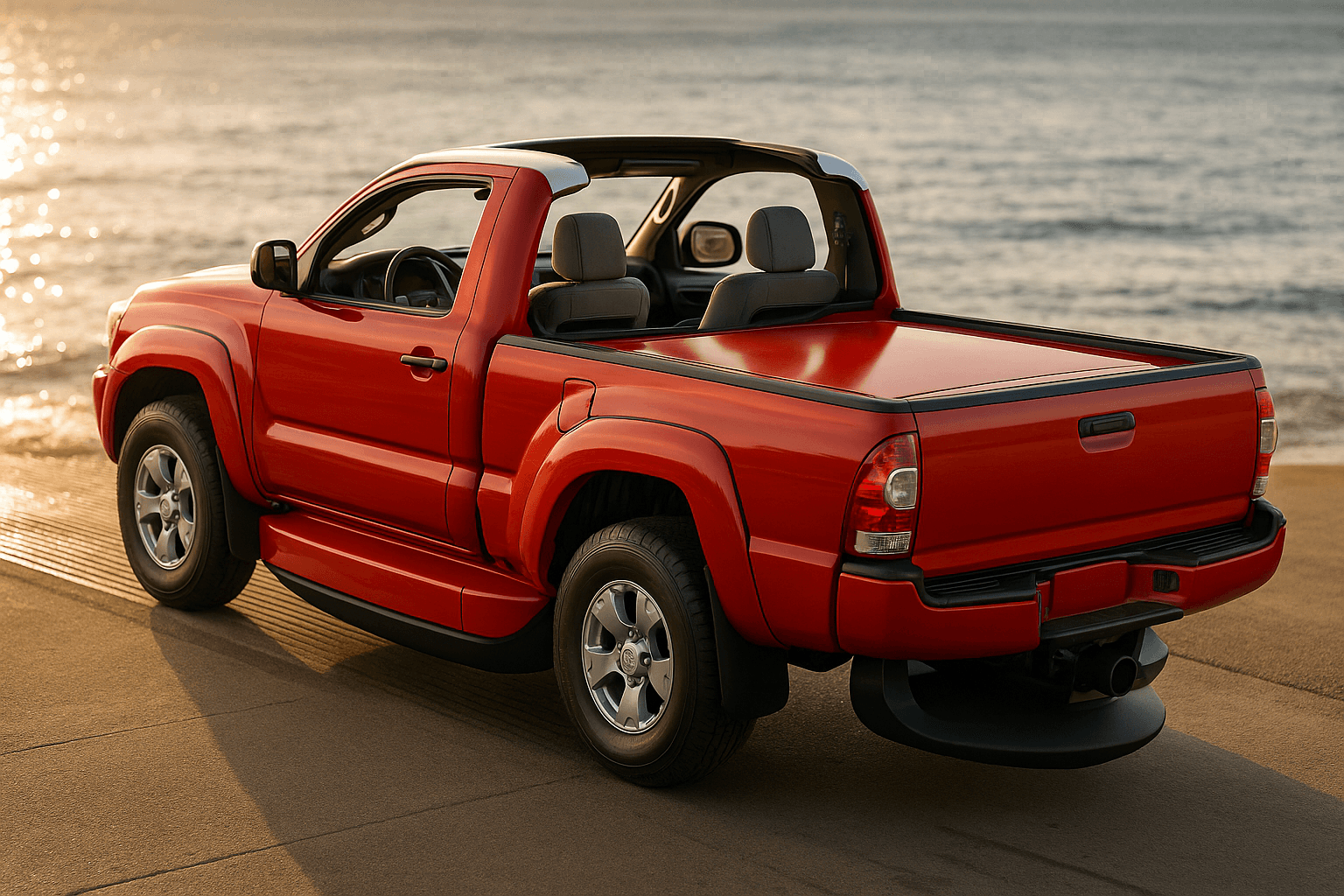
Tacoma TRD Targa Baja Convertible
A 2006 TRD USA one-year experiment in a roofless Tacoma — positioned above the X-Runner as a lifestyle halo aimed at the California beach-town buyer who wanted the visual drama of a Jeep Wrangler and the on-road refinement of a Tacoma. The factory roof structure was replaced with a targa-style removable hardtop over the front seats and a permanent roll hoop behind the cab finished in body color, the rear cab wall was swapped for a zip-down vinyl panel that opened to the bed, and the whole truck was fitted with marine-grade upholstery and weather-sealed switchgear. Nineteen were built for a pilot program at Toyota of Newport Beach and Toyota of Santa Monica; the program was killed after TRD's internal crash testing showed the roll hoop was 'decorative at best.'
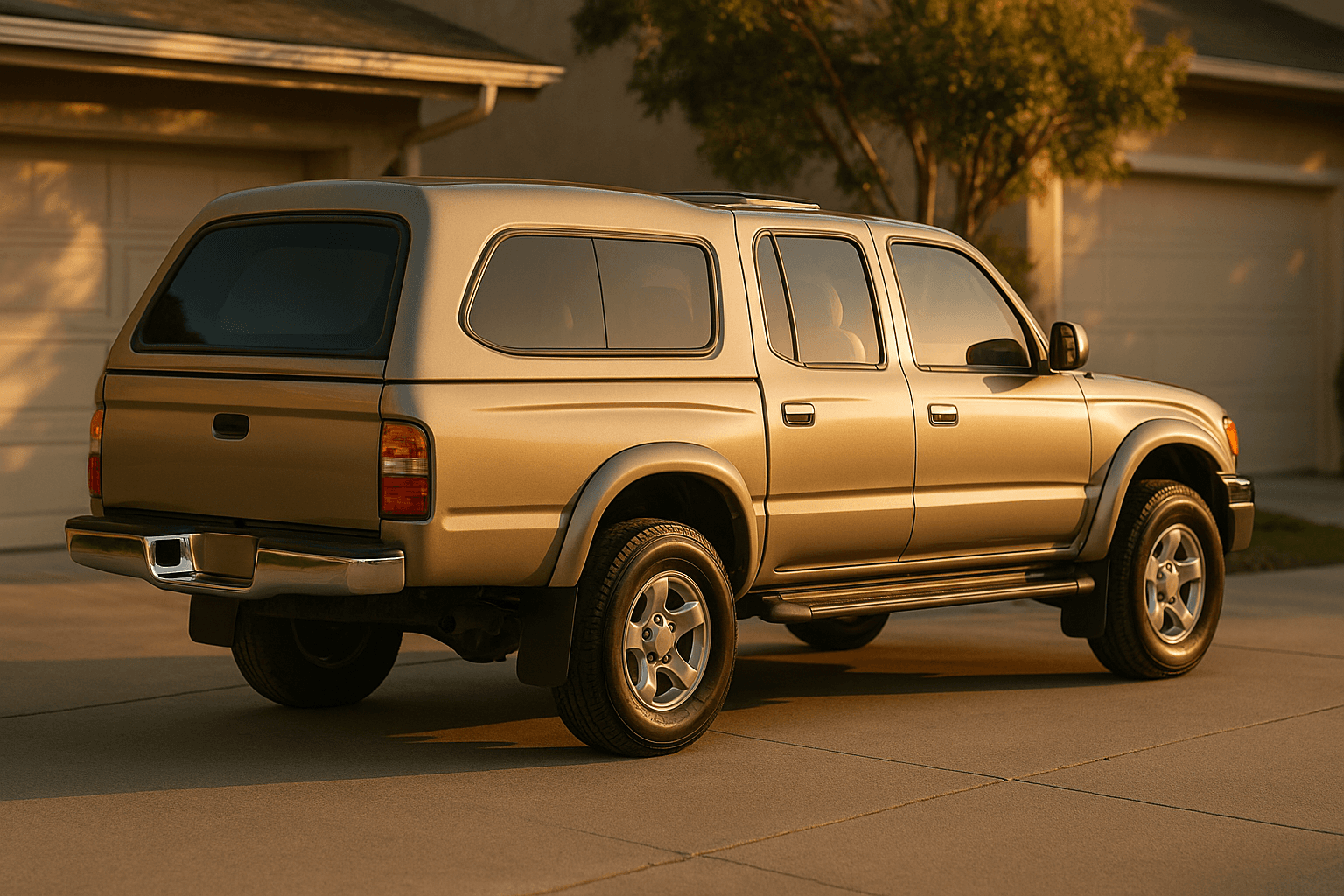
Tacoma Limited Wagon
Toyota's forgotten first attempt at a crew-cab Tacoma — a four-door wagon body submitted to US DOT for certification three full years before the 2001 Double Cab finally shipped. Built on a stretched first-gen frame with a molded fiberglass canopy over the bed, leather interior, and the Limited's power moonroof, it was intended to slot above the SR5 V6 as the family-truck flagship. DOT rejected the petition on bumper-height non-compliance; Toyota Motor Sales USA shelved the program rather than re-engineer the rear crash structure, and the Double Cab returned four years later as a separate platform.