Tacoma
Heresies
Where the Apocrypha catalogues the trucks that should have been — too fast, too noble, too useful — the Heresies catalogue the trucks that were, briefly, and embarrassed everyone involved. Sourced from GSA procurement memos, TTC slide decks marked “do not circulate,” and the personal diaries of product-planning interns who left the company shortly thereafter.
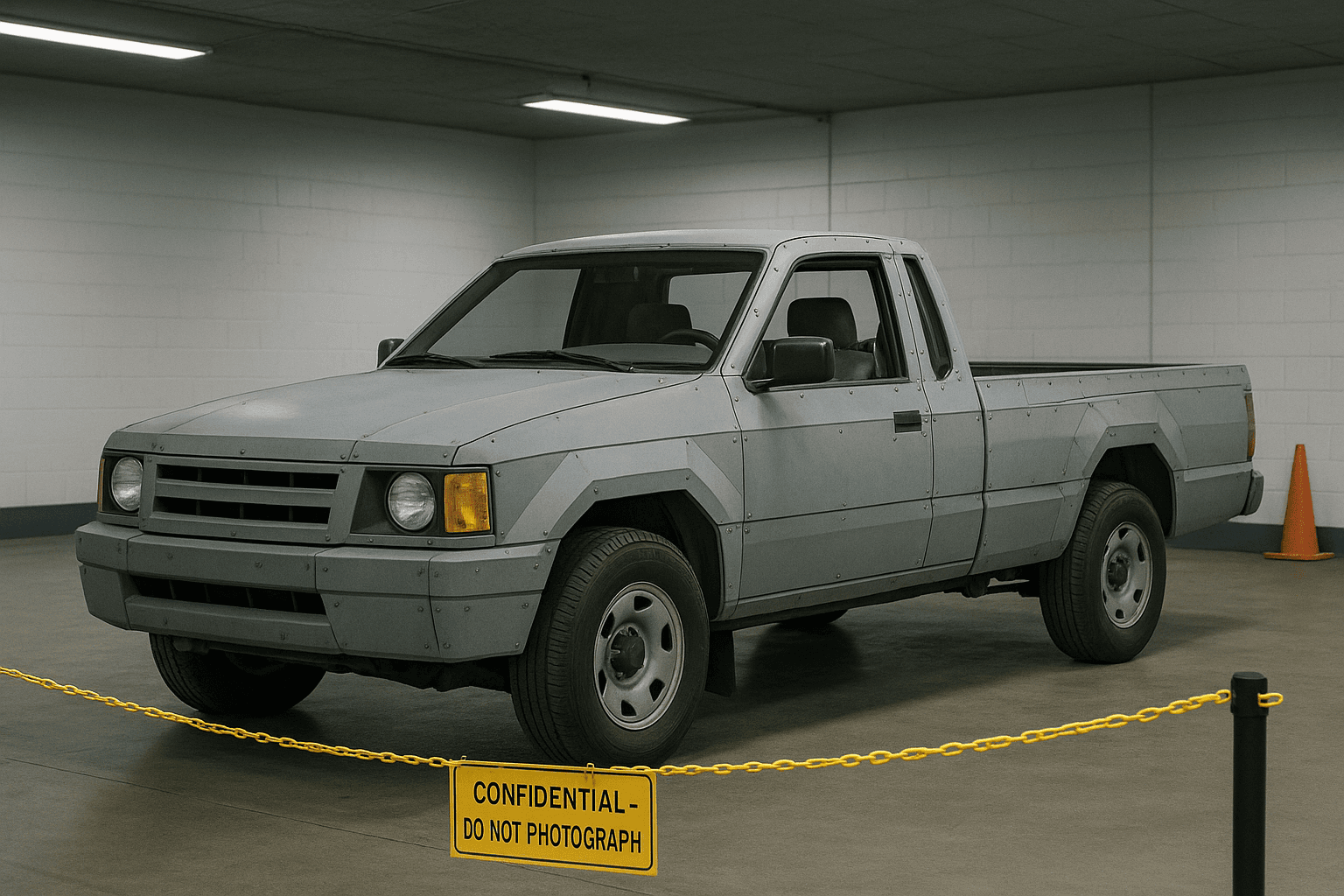
Tacoma Trapezoid (Calty Design Study 99-D)
A Calty Design Research exercise intended to preview a 'post-curvilinear' design language for the second-generation Tacoma. Every compound curve on the donor 1998 Tacoma was replaced with a flat, angled planar panel, pinned in place with exposed hex bolts. Target panel gap was 3 mm; achieved average panel gap was 11 mm, with a measured maximum of 19 mm at the right B-pillar. The lead designer resigned three weeks into the clay phase and was last confirmed working for a boutique furniture company in Denmark. Wind tunnel testing returned a drag coefficient of 0.71 — worse than a shipping container. Toyota declined to show the Trapezoid at any auto show and sealed all three shells at the Toyota Technical Center in Torrance, where they remain.
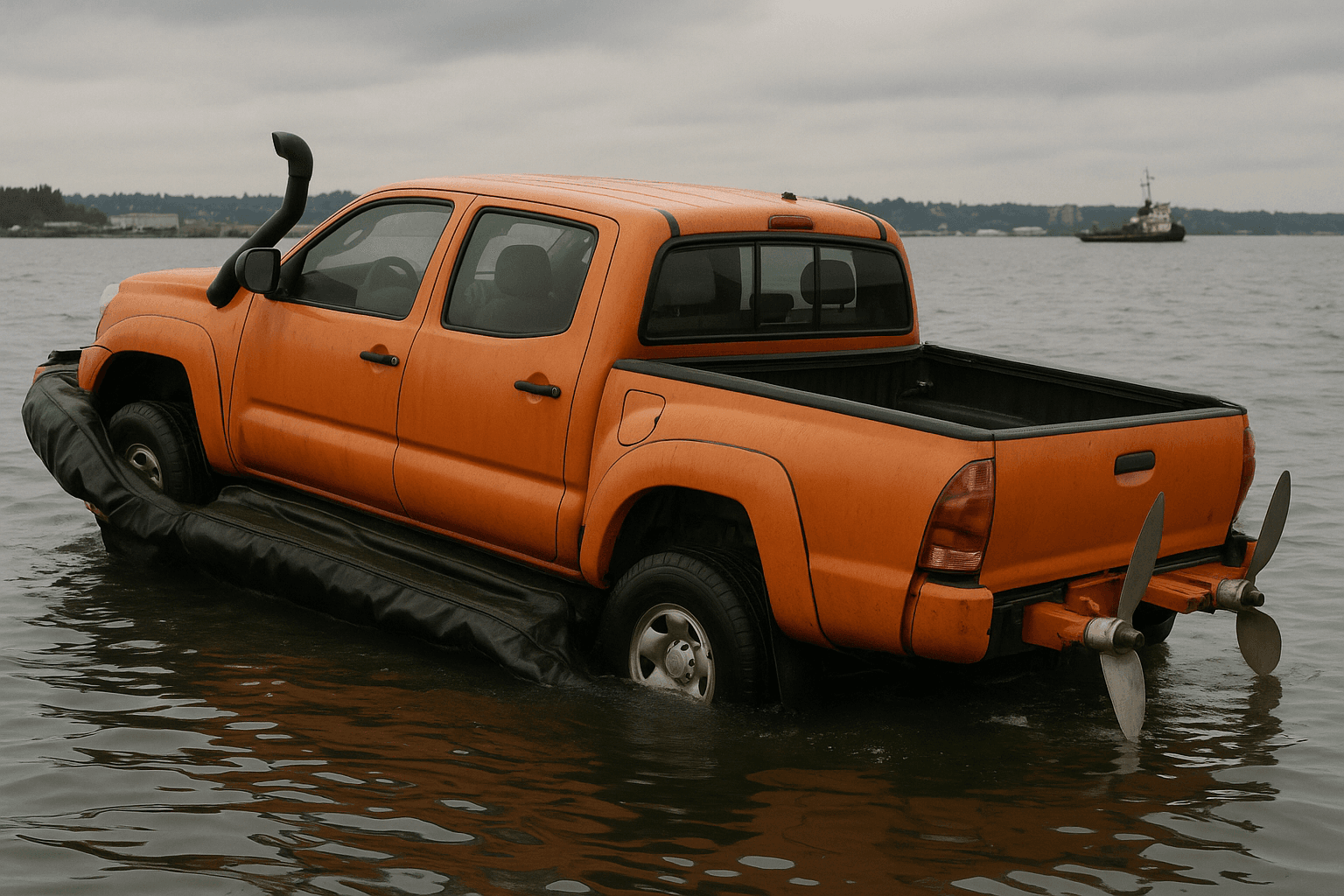
Tacoma Aquatic Lunchbox (FEMA RFP-09-117 Response)
Toyota's response to FEMA RFP-09-117, which solicited an 'amphibious light-duty recovery vehicle' for post-Katrina deployment. A standard Tacoma Double Cab was fitted with a Gibbs-licensed amphibious conversion: twin props driven from a PTO off the transfer case, retractable wheels, an inflatable skirt seal, and a dash-mounted bilge-pump toggle. The sealing skirt was sourced from a marine-accessory supplier that had not previously built anything larger than a Boston Whaler. During Toyota's own FEMA demo at Lake Washington in August 2011, the skirt held for 14 seconds of full immersion; the truck settled to the bed of the lake in 3 m of water, where it remained for 11 days before a commercial salvage operator retrieved it. Toyota ate the $340,000 cost and formally withdrew from RFP-09-117 the following week.
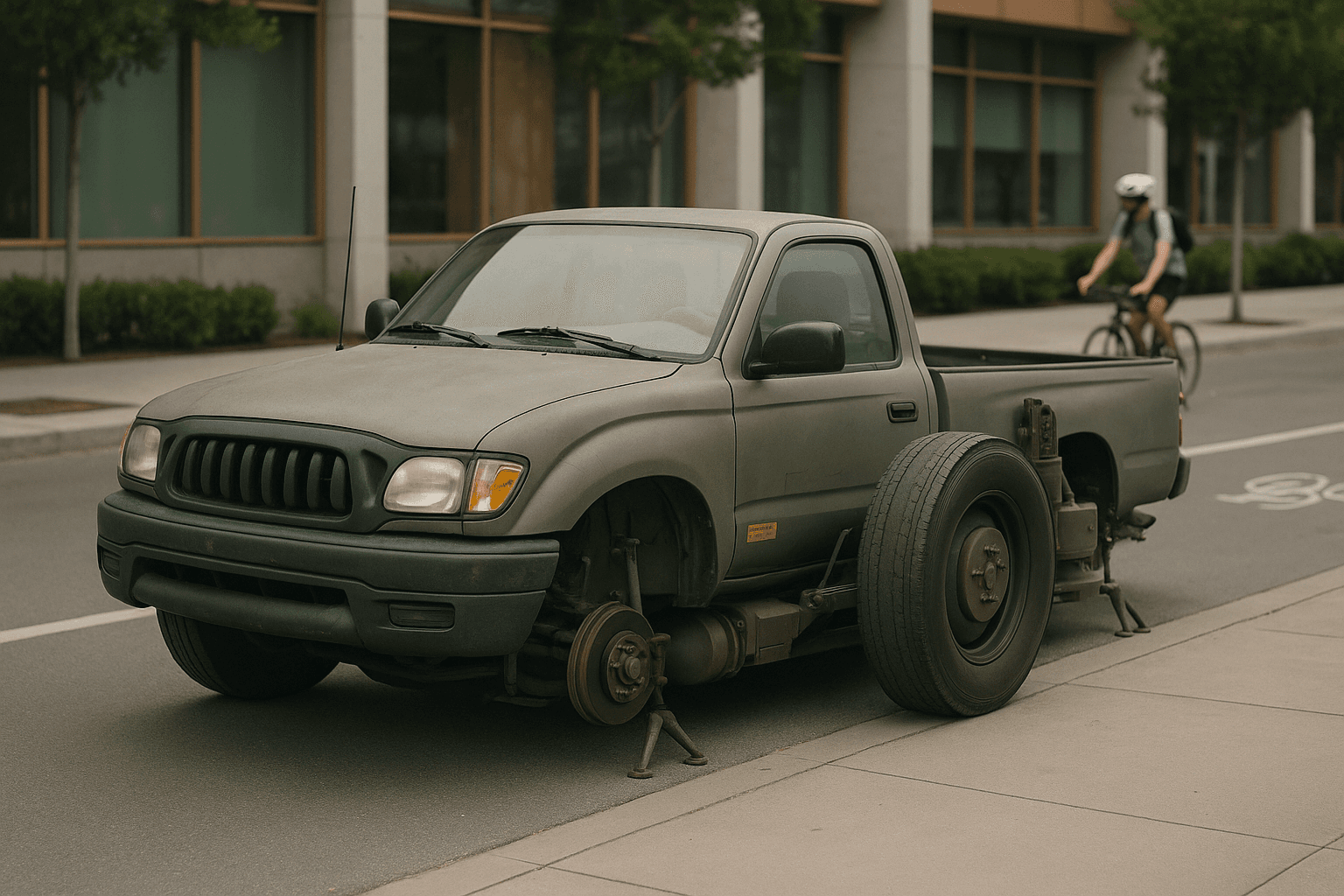
Tacoma Self-Balancing Urban Agility Concept (DARPA BAA 04-12)
Toyota Motor North America's submission to DARPA Broad Agency Announcement 04-12, which sought 'agile urban delivery platforms capable of maneuvering in congested last-mile environments.' A first-gen Tacoma was stripped to the frame, re-engineered around a twin-wheel self-balancing architecture licensed from Segway LLC, and fitted with a custom 48V electric drivetrain. The balance controller was written by a 22-year-old Stanford undergraduate on a summer contract, using a modified version of his senior-project code. The controller assumed a static center of mass; the center of mass of a pickup truck with a variable payload is not static. The Tacoma fell over at every traffic light during its first public demo on Sand Hill Road, a five-stoplight route. DARPA clawed back the grant in full the following quarter.
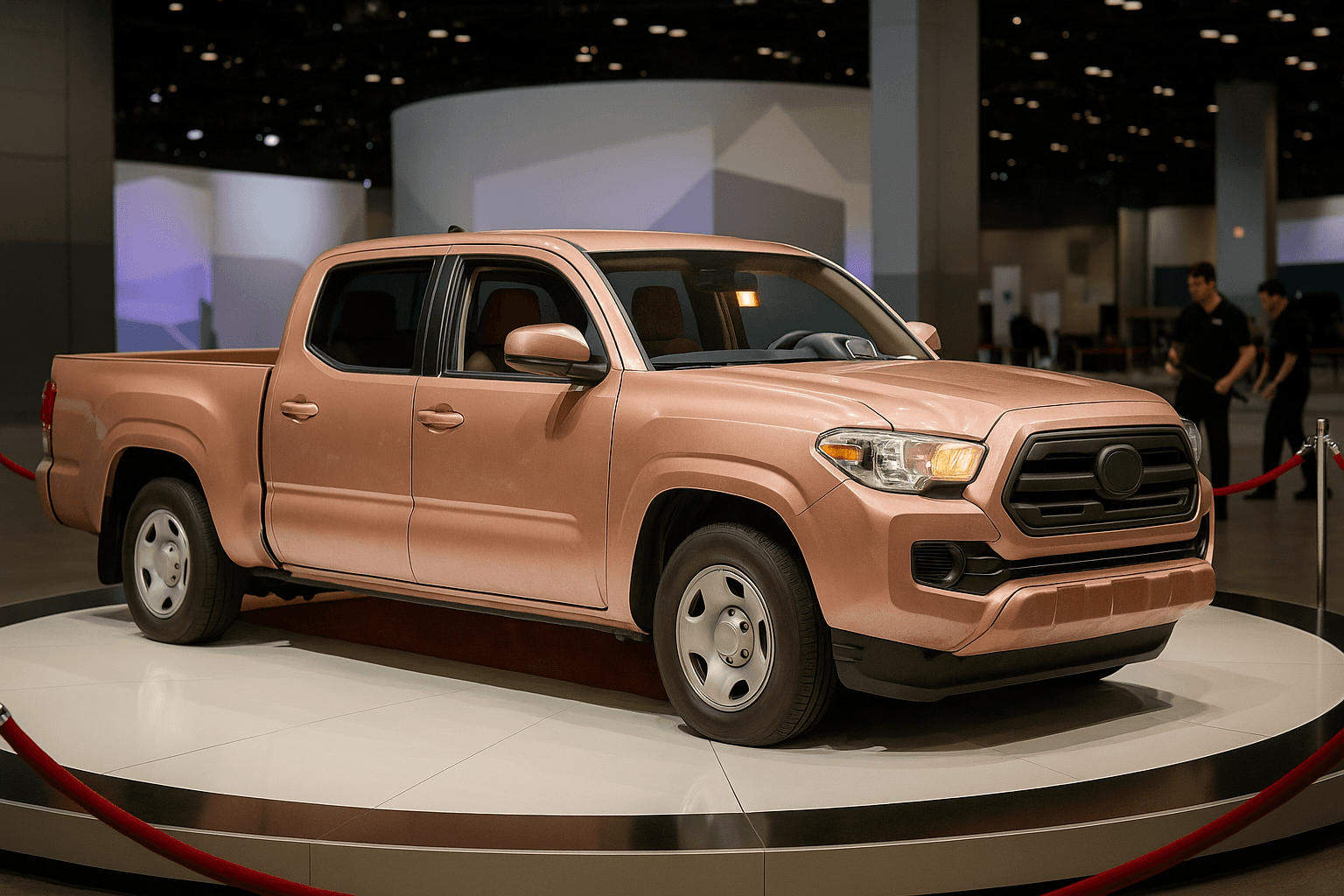
Tacoma Retail Therapy (North American Mall Spec)
A concept floated by Toyota's North American product-planning group for the 2016 Chicago Auto Show, developed after a Nielsen segmentation study concluded that 61% of urban crossover buyers 'do not meaningfully leave paved parking lots.' The Retail Therapy was a Tacoma re-engineered to serve that segment without pretense. Ground clearance was reduced to 4.0 inches (vs. 9.4 inches standard). The turning radius was intentionally widened to 20 ft to simulate 'capability.' Tow rating was zero, and the hitch receiver was removed. The dashboard integrated a certified ApplePay terminal for 'drive-up retail,' a wine bottle chiller in the center console, and a backlit vanity mirror on the driver's sun visor. The stand was set up in the West Hall on press day at 10:04 AM. It was dismantled by 10:44 AM on direct order from Toyota USA's president.
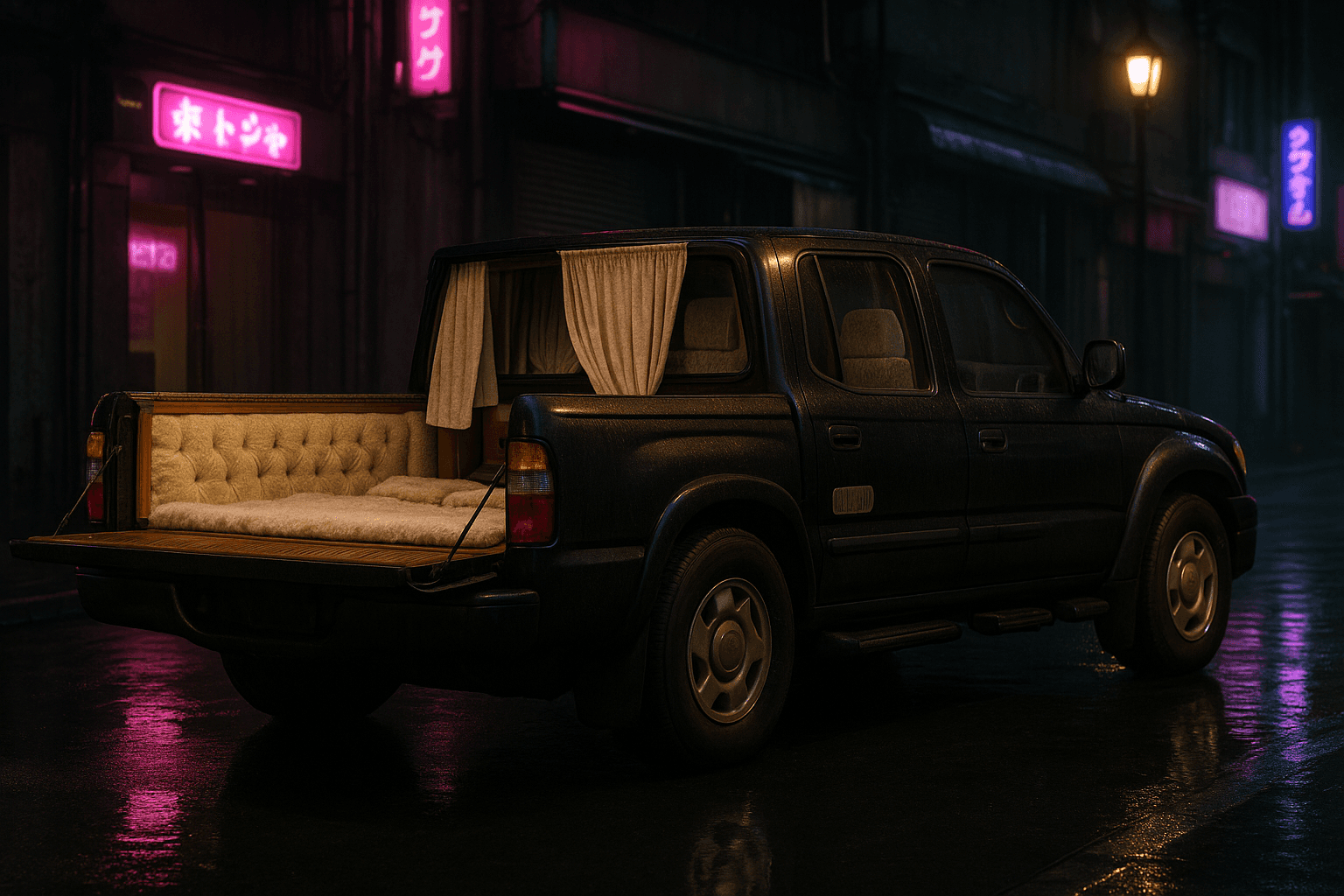
Tacoma Executive Lounge (JDM Dealer Option JP-3)
Conceived by Toyota Netz dealerships in Osaka as a Century-adjacent flex product for clients who wanted the Century experience but 'with the pickup-bed lifestyle.' The bed was lined with tufted wool shag in Lace Cream, trimmed in fake teak, and fitted with a removable rear privacy curtain on stainless rails. Rear-seat passengers received powered footrests, a cassette deck with auto-reverse, a small refrigerated compartment (3.1 L), and lace seat covers applied at the factory. Added curb weight came from the sound-deadening foam, the teak bed liner, the factory rear overhangs, and the second battery needed to run the footrests. All 47 units sold, entirely to hostess-bar owners in Umeda. Forty-one of those forty-seven owners filed a collective back-pain suit against Toyota Netz in 2007.
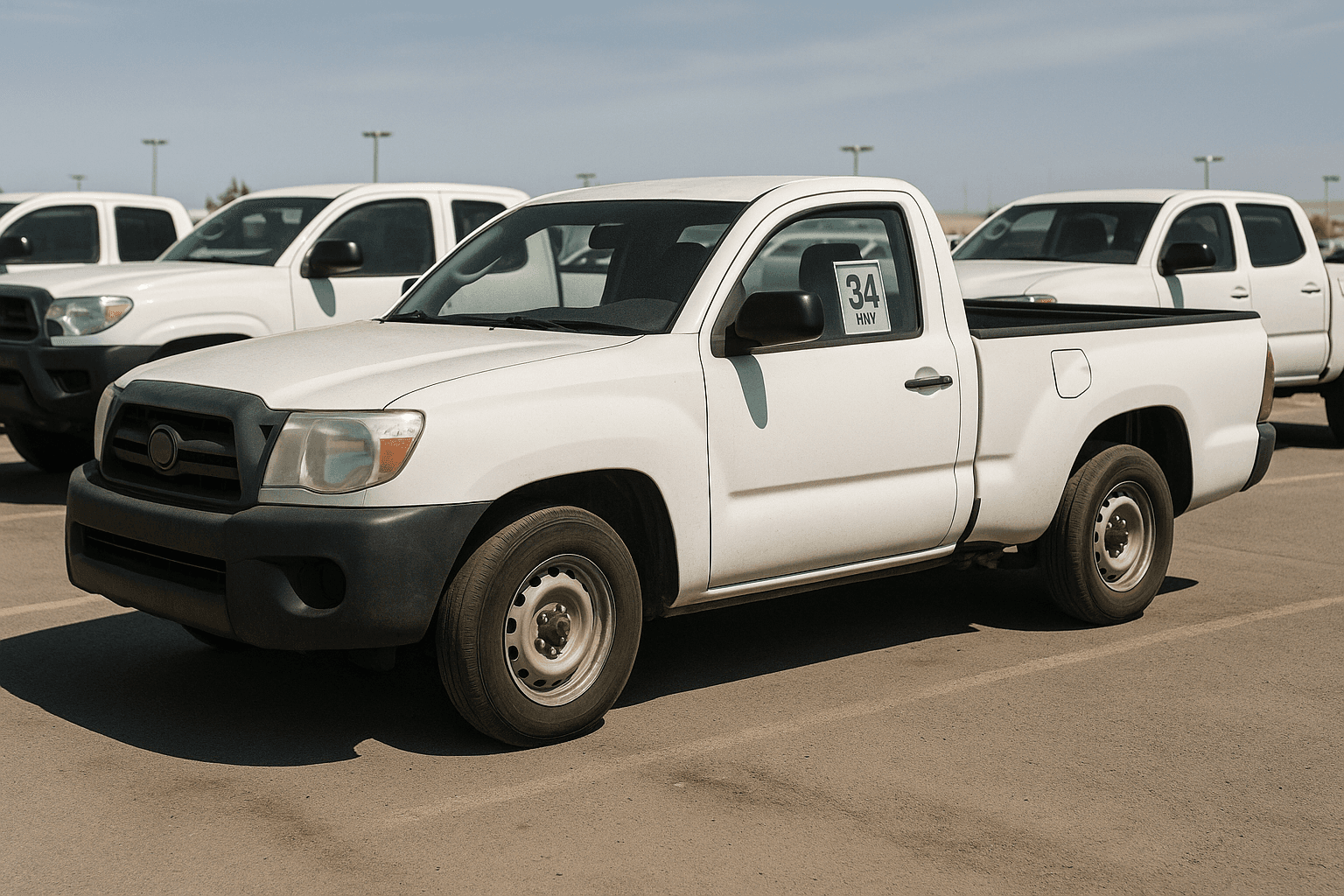
Tacoma Eco-Coma (CAFE Credit Edition)
Toyota's North American regulatory group, facing a projected 2009 CAFE shortfall, directed Toyota Motor Manufacturing Texas to produce a compliance trim engineered purely to bank fuel-economy credits. Every discretionary load on the 2TR-FE was retuned for drag reduction: valve timing was locked, throttle travel was capped mechanically, the alternator was swapped for a lower-output unit, and all four corners received drum brakes (front discs were reintroduced at month three after a NHTSA review). EPA rated the result at 34 mpg highway, the highest figure ever attached to a Tacoma badge. It also produced 52 hp, a top speed of 71 mph measured downhill with a tailwind, and a 0–60 time that Car and Driver declined to publish out of what the magazine's editor-in-chief described as 'professional mercy.' Toyota pulled the trim after 4 months; every unsold Eco-Coma was retuned to standard 2.7L output before delivery.
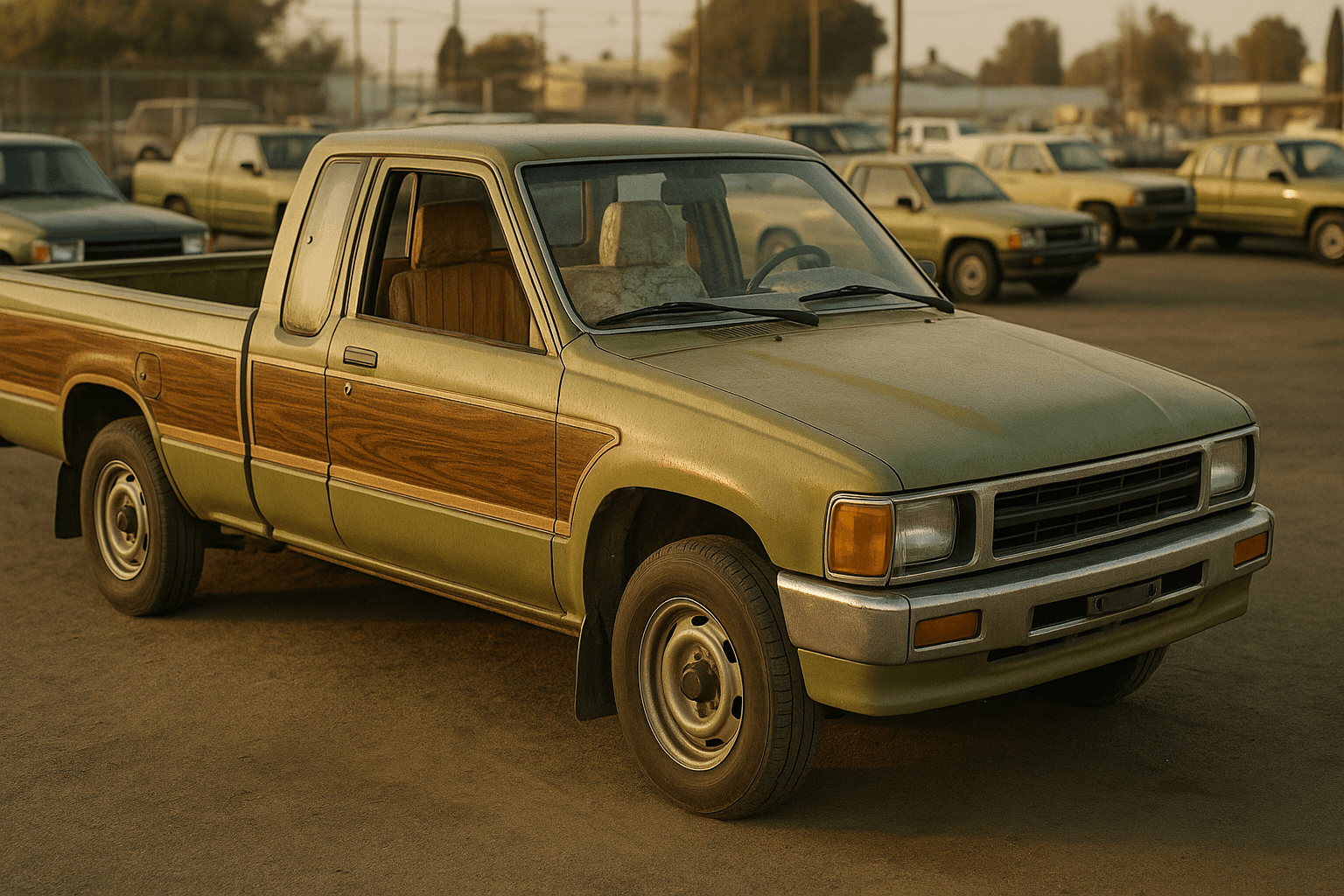
Toyota Pickup Deluxe Wood-Grain Appliance Edition
A 1987 dealer-package experiment proposed by a group of Central Valley California Toyota dealers who had observed strong used-market demand for the 1983 Chrysler Town & Country and concluded that 'the wood package transfers.' Interior trim was replaced wholesale with actual tongue-and-groove pine slats (unfinished, by spec), and the entire dashboard was skinned in a faux-marble Formica laminate sourced from a countertop supplier in Bakersfield. The exterior was offered in Avocado Green only, with optional dealer-applied Di-Noc wood-grain body sides for an extra $420. Two dealers took the two allocated promo units. One returned theirs to Toyota after fourteen months, unsold, with a handwritten note reading 'please.'
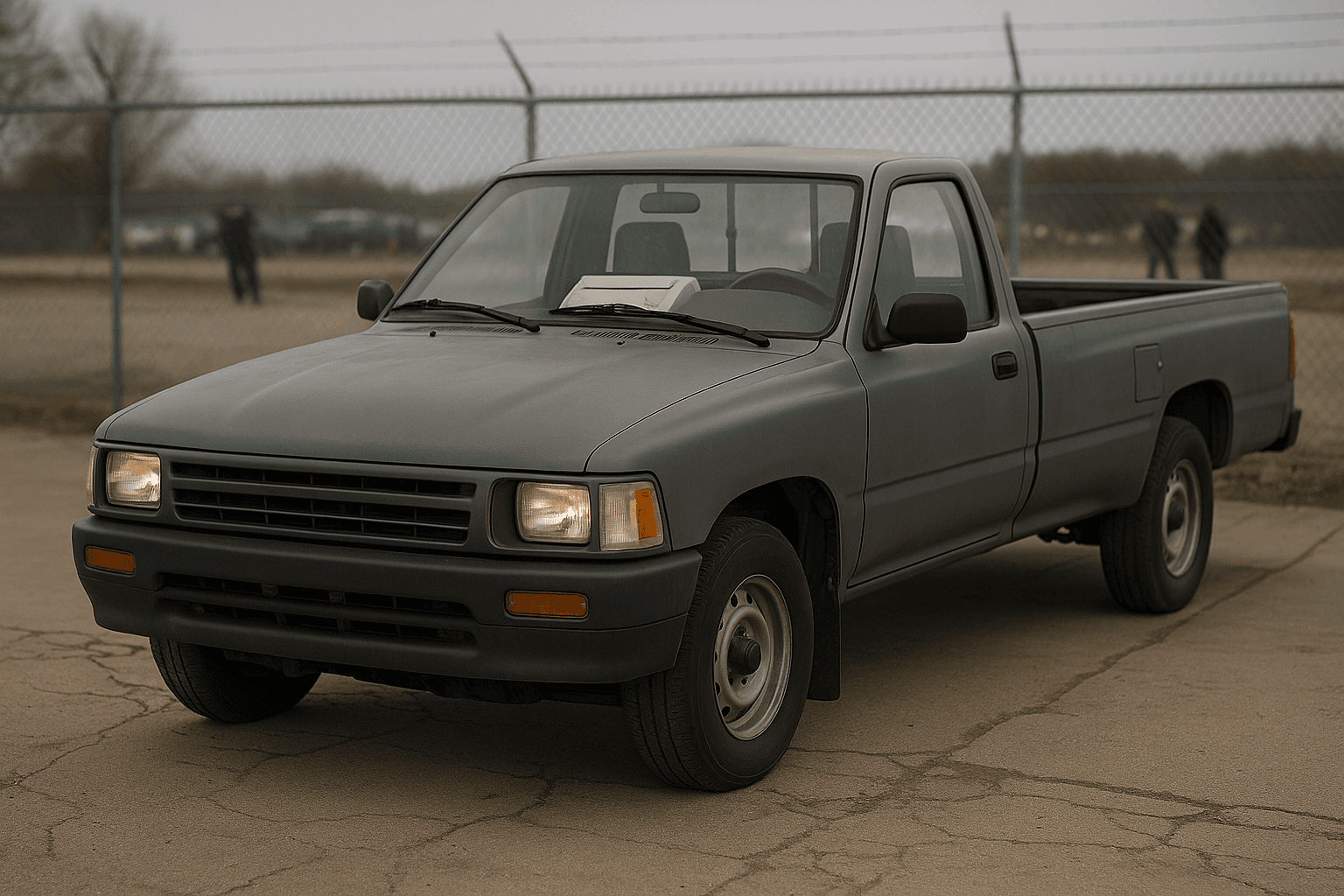
Toyota Pickup Bureaucrat (GSA Fleet Spec 07-B)
A contract build produced for the General Services Administration under fleet spec 07-B, which mandated 'no discretionary comfort equipment' and a per-unit price below $8,400. Toyota's Torrance office treated the contract as a loss leader to win access to subsequent civilian-agency orders that never materialized. The 22R-E was choked with a restrictive exhaust and an intake shim to drop output below 100 hp, the single threshold that triggered the federal low-emissions fleet subsidy. Every unit shipped with rubber floors, unpainted steel interior panels, a sealed single-speaker AM-only radio, and a factory-mounted Panasonic UF-322 thermal fax bolted to the transmission tunnel. A Torx-accessible governor capped speed at 62 mph; every DMV received the bit in its annual maintenance kit.